When the Whole Country Sleeps: Inside the Secret Call Life of America's Night Workers
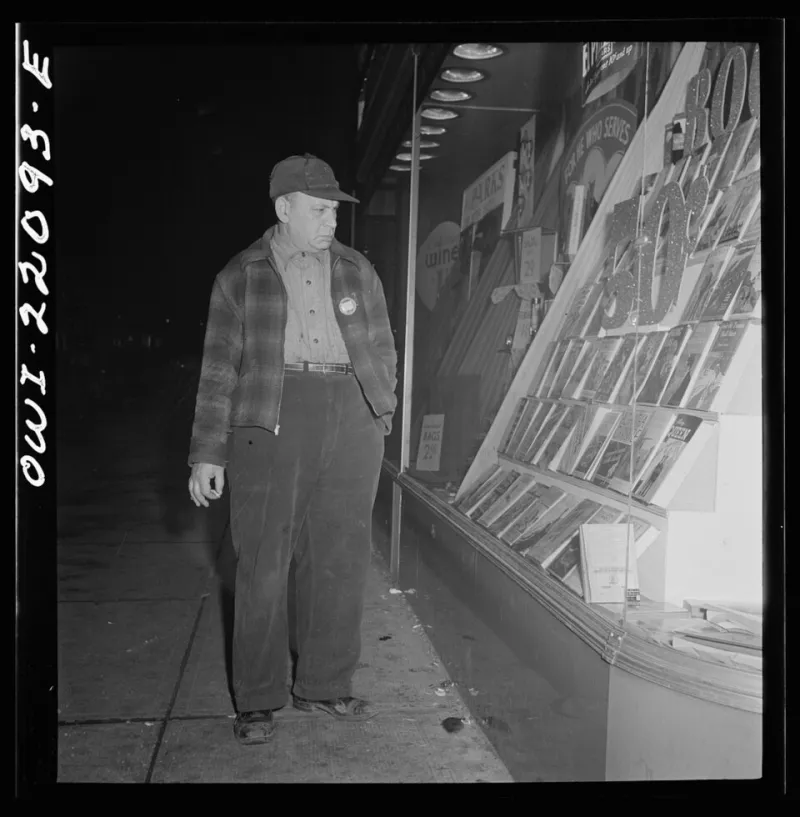
Photo: Marjory Collins, Public domain, via Wikimedia Commons
It's 3:17 a.m. in Toledo. Most of Ohio is unconscious. But somewhere out there, a nurse is on her second cup of break-room coffee, a trucker is climbing I-80 through Wyoming with nothing but taillights and a podcast he's already heard twice, and a 911 dispatcher is staring at a bank of screens waiting for the next bad thing to happen.
These are the people who keep America running while it sleeps. And if you work in phone intimacy, you learn something pretty quickly: they're also some of the warmest, most generous, most loyal callers you'll ever meet.
A Body Clock Nobody Else Shares
The night shift doesn't just mess with your sleep. It messes with your entire social architecture.
Think about it. Happy hour? You're on shift. Sunday brunch? You're finally getting into bed. Your partner's — or your friends' — entire emotional lives happen between 6 p.m. and midnight, which is exactly when you're elbow-deep in someone else's emergency.
Psychologists call this social jet lag, and researchers who study shift workers have documented it for decades: overnight schedules don't just cause fatigue, they erode connection. You're awake when the world isn't. The people who love you are operating on a clock that no longer matches yours.
So the night worker ends up with a strange surplus — hours of alertness, emotional energy, and yes, longing, with almost nowhere to put it. You can't exactly call your sister at 3 a.m. to talk about your week.
But you can call someone whose whole job is picking up.
The Voice Economy of the Overnight Shift
There's a reason dispatchers and nurses make naturally great callers: their entire professional lives are built around voice.
A dispatcher can't see the person on the other end of a 911 call. They read tone, breathing, the tremor in a sentence. They've spent years learning how much information a human voice can carry — and how much comfort it can deliver with nothing but calm words and steady pacing.
Nurses, especially night nurses, talk people through the worst nights of their lives. They know how to fill a silence without smothering it. Truckers, meanwhile, spend ten-hour stretches with nothing but a CB radio's ghost culture — a world that was always about voice, banter, and the strange intimacy of strangers in the dark.
When someone with that background dials a phone intimacy line, they're not fumbling. They already know the grammar of talking to a disembodied voice. And they tend to bring a genuine curiosity about the person on the other end, because they've spent careers on calls where the voice was the whole story.
Loneliness, But Make It Practical
Here's the part that surprises people: night workers aren't calling because they're desperate. They're calling because they're efficient.
When your social window is 4 a.m. to 8 a.m., you don't have time for the slow choreography of modern dating. You can't do the three-day text dance. You can't meet someone for drinks you'll sleep through. What you can do is pick up a phone, talk to an actual human being who's actually happy to hear from you, and get a real dose of warmth, flirtation, and feeling in twenty minutes.
One caller — a freight dispatcher in Kansas City — put it to us plainly: "I don't need another app. I need a person who's awake."
That's the whole thing, really. Phone intimacy, for the overnight crowd, isn't an exotic indulgence. It's logistics. It's the only social slot their schedule allows, and it happens to be a good one — unfiltered, voice-to-voice, no small talk about the weather unless they want it.
The Generosity of People Who See Hard Nights
There's one more pattern worth naming. Night workers — the ones who spend their shifts inside other people's emergencies — tend to be unusually kind callers.
It tracks. If your job is holding someone's hand through a crisis at 4 a.m., you develop a certain tenderness. You don't take connection for granted, because you spend eight hours a night watching people at their most frightened and most alone. When they get on a call with someone who's glad they called, they show up with real presence. They ask questions. They remember what you said last time.
In an industry that gets caricatured as transactional, the night shift regulars are a reminder of what this actually is: two people, awake in the dark together, choosing to make it a little warmer.
The Country Runs on Them. Who Checks on Them?
We hand night workers our worst moments — the crash on the interstate, the code blue, the 18-wheeler in a whiteout — and then we mostly forget they exist until we need them.
So the next time you can't sleep and you're wondering who else is up: a whole workforce is. And a surprising number of them are on the phone, trading the night's quiet for a voice that's happy they dialed.
The rest of America sleeps. They hold the line — and occasionally, someone holds it with them.