Faceless and Fearless: How Anonymity Unlocks Your Truest Sexual Self
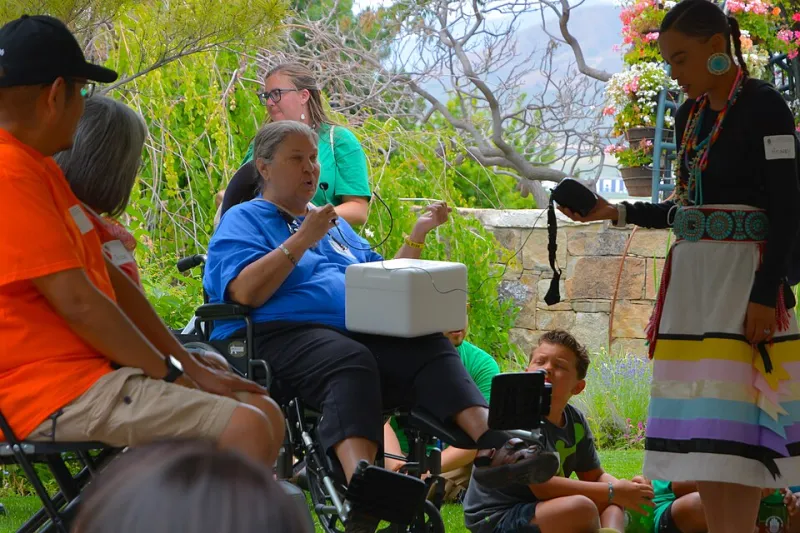
Photo: BLMUtah, Public domain, via Wikimedia Commons
Most of us carry around a version of ourselves we perform for other people — a curated, socially acceptable edition that knows which desires to keep tucked away. We edit ourselves constantly, often without even realizing it. But strip away the visual layer, remove the face and the body language and the eye contact, and something interesting starts to happen. People get honest. Sometimes radically so.
This isn't just anecdotal. There's a growing body of psychological and neuroscientific research pointing toward what some researchers are calling the vulnerability paradox — the counterintuitive truth that anonymity, rather than creating distance, can actually produce deeper, more authentic self-expression. Nowhere is this more apparent than in the realm of sexual desire.
The Audience in Your Head
Here's the thing about shame: it needs a witness. Real or imagined, shame is fundamentally a social emotion. It's not just about doing or wanting something — it's about being seen doing or wanting it. Neuroscientists have found that the brain regions associated with self-conscious emotions, particularly the medial prefrontal cortex, are heavily tied to how we anticipate other people's judgments.
When you're face-to-face with someone — a partner, a lover, even a therapist — that part of your brain is working overtime. You're monitoring their microexpressions, reading their body language, adjusting your behavior in real time based on what you think they think of you. It's exhausting, and it's also deeply inhibiting.
Remove the visual element, though, and that internal audience gets a lot quieter. The anticipatory shame response dials down. And in that quieter mental space, desire has room to breathe.
Why Your Deepest Wants Come Out in the Dark
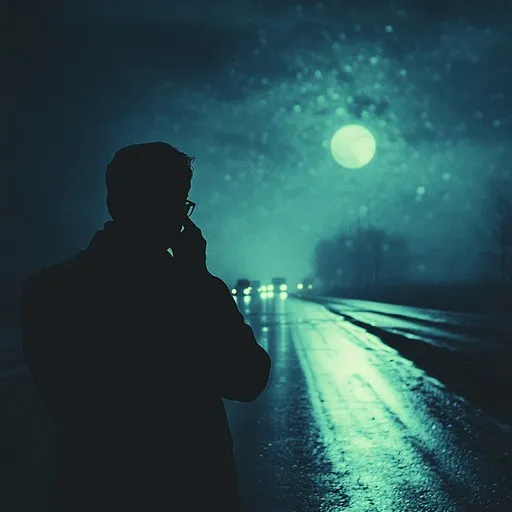
There's a reason the classic advice for couples struggling with sexual communication is often to "talk about it in the dark." Physical darkness — or its functional equivalent, like a phone call where neither party can see the other — removes the feedback loop of visible judgment. You can't see a raised eyebrow. You can't catch a flicker of surprise or discomfort. What you're left with is just your own voice and someone else's.
This is especially significant in American culture, which sends wildly contradictory messages about sex. We're simultaneously oversaturated with sexual imagery and deeply uncomfortable with genuine sexual candor. The result is a population that's seen everything but said very little — at least, not out loud to the people who matter.
Anonymous voice-based connection sidesteps that cultural knot almost entirely. You're not performing for a partner who knows your family, your job, your Sunday morning routines. You're talking to a voice that exists in a separate, sealed-off space. That separation isn't a bug — it's the whole feature.
The Neuroscience of Privacy and Arousal
Arousal and anxiety share a lot of the same neurological real estate. Both involve elevated heart rate, heightened sensory awareness, and activation of the sympathetic nervous system. The difference, in large part, comes down to context and perceived safety. When the brain decides a situation is safe, that same physiological activation gets coded as excitement rather than threat.
Anonymity, for many people, functions as a powerful safety signal. Research on online disinhibition — the well-documented tendency for people to be more open and expressive in contexts where their identity is obscured — suggests that when the social stakes feel lower, the nervous system relaxes its guard. And a relaxed nervous system is, neurologically speaking, a far more fertile ground for genuine arousal.
This is why people routinely describe phone-based intimate experiences as more intense rather than less, despite the absence of physical presence. The brain isn't distracted by visual processing or social monitoring. It's fully tuned to sensation, voice, and imagination — three of the most potent ingredients in human desire.
The Partner Problem
There's an uncomfortable truth lurking here, and it's worth naming directly: many people find it genuinely harder to express their desires to long-term partners than to anonymous strangers. This isn't a character flaw or a sign of a broken relationship. It's almost boringly predictable from a psychological standpoint.
The closer someone is to the rest of your life, the higher the perceived stakes of their judgment. A partner who knows your parents, shares your mortgage, and will be sitting across from you at breakfast tomorrow carries enormous social weight. Revealing a fantasy to them isn't just a sexual disclosure — it's a potential renegotiation of how they see you across every other dimension of your shared life.
An anonymous connection carries none of that freight. There's no continuity to protect, no reputation to manage. What gets said in that space stays in that space. And paradoxically, that containment is what makes genuine openness possible.
Exploring Without the Stakes
Psychologists who study sexual development talk about the importance of low-stakes exploration — the idea that people need spaces to try on desires, to hear themselves articulate wants out loud, before they can fully integrate those wants into their sense of self. Historically, that kind of exploration happened in youth, often messily. But desire doesn't stop evolving at 25.
For adults, anonymous voice intimacy can function as exactly that kind of low-stakes laboratory. It's a place to find out what you actually want, separate from the complicated web of what your partner wants, what your culture says you should want, and what you've always assumed about yourself.
A lot of people are surprised by what comes up. Desires they'd filed away as too weird, too much, too vulnerable — they surface in these conversations with a kind of ease that feels almost disorienting at first. That ease isn't a fluke. It's what happens when the part of your brain that manages social reputation finally gets a break.
Bravery Sounds Like a Voice in the Dark
There's a version of courage that looks like grand gestures and public declarations. And then there's the quieter kind — the kind that happens when you're alone with a phone pressed to your ear, saying something true about yourself that you've never quite said before.
That second kind of bravery doesn't get a lot of cultural credit. But for a lot of people, it's the kind that actually changes things. Not just in how they engage with intimate connection, but in how they understand themselves.
Anonymity doesn't make you a different person. It just makes it easier to be the one you already are.