Less Face, More Feeling: The Weird Reason Phone Calls Beat Video Every Time
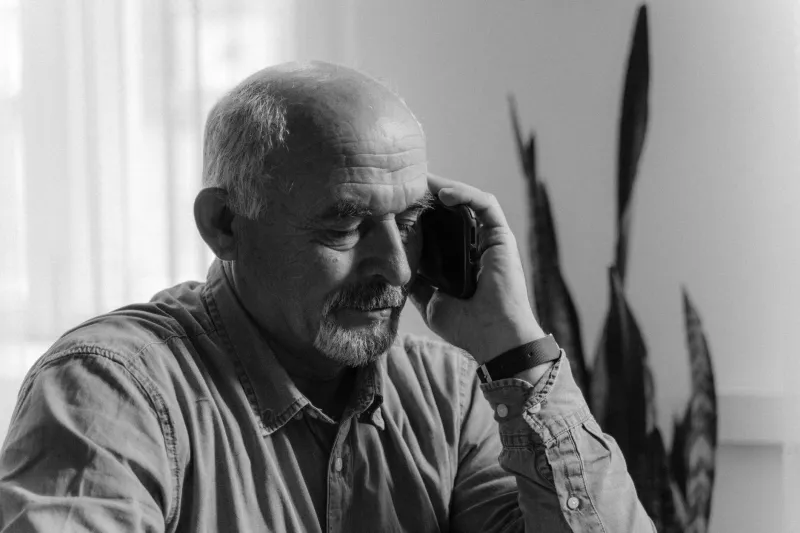
Here's something that probably doesn't match your intuition: the more you can see someone, the less you might actually feel them.
We've been sold on the idea that video calls are the gold standard of remote connection. More pixels, more presence — that's the pitch. But a growing body of research, plus the lived experience of anyone who's ever had a genuinely electric phone conversation, suggests the opposite might be true. There's something about a pure voice connection that cuts straight through the noise and lands somewhere deeper.
At PhoneDesire, we've built an entire platform on that truth. And the science is finally catching up.
Your Brain Doesn't Just Receive — It Creates
When sensory input is limited, the brain doesn't sit back and shrug. It gets to work. Neuroscientists call this "perceptual completion" — the brain's tendency to fill in missing information using imagination, memory, and emotional context. When you're only hearing a voice, your mind is actively constructing a fuller picture of that person based on tone, pacing, breath, and word choice.
That construction process is intimate by nature. You're not passively watching someone — you're building them, in real time, from the inside out. The version of them that forms in your head is shaped by your own emotional state, your desires, your vulnerabilities. It's deeply personal in a way that a face on a screen simply isn't.
Dr. Pamela Rutledge, a media psychologist who has written extensively on technology and emotional engagement, has noted that audio-only communication tends to heighten emotional sensitivity. When you remove visual distractions, listeners become more attuned to vocal nuance — the slight hesitation before an honest answer, the warmth that creeps into someone's voice when they're genuinely interested, the way a laugh sounds different when it's real.
You hear everything differently when there's nothing else to look at.
The Video Call Problem Nobody Wants to Admit
Video calls promised us the next best thing to being there. What they actually delivered was a strange new kind of performance anxiety.
Think about the last time you were on a video call and caught your own reflection in the corner of the screen. Suddenly, part of your brain is managing your appearance — your lighting, your background, whether you look engaged enough, whether you're making the right amount of eye contact. That's cognitive overhead that has nothing to do with actual connection.
Researchers at Stanford University published findings in 2021 describing "Zoom fatigue" — the particular exhaustion that comes from sustained video interaction. One of the core causes? The constant, low-level self-monitoring that video calls demand. You're not just talking to someone; you're also watching yourself talk to someone. That split attention is the enemy of genuine vulnerability.
And vulnerability, as any relationship therapist worth their hourly rate will tell you, is the actual engine of connection.
What Therapists Have Known for Years
Before video calls were even a thing, therapists noticed something interesting about phone sessions versus in-person ones: clients often went deeper, faster, over the phone.
Part of that is the physical setup — lying on your couch in the dark, no eye contact to manage, the intimacy of a voice in your ear. But a lot of it comes down to what therapists call "the gaze problem." Direct eye contact, even with someone you trust, triggers a low-level threat response in many people. It signals evaluation. It makes you feel watched.
Remove the visual element and that threat response quiets down. People stop performing and start talking. They say the thing they actually mean instead of the thing that looks right.
This is exactly why some of the most honest conversations in people's lives happen over the phone — confessions made at midnight, breakthroughs during long drives, the kind of emotional depth that just doesn't seem to show up when there's a camera involved.
The Voice Carries What the Face Conceals
Here's the paradox at the heart of all this: faces are actually pretty good at hiding things. We've spent our whole lives learning to manage our expressions — to smile when we're uncomfortable, to look calm when we're anxious, to project confidence we don't feel.
Voices are harder to control.
Microtremors, pacing, the rhythm of breathing — these things leak information that our conscious minds aren't managing. When you're listening to someone's voice without the distraction of their face, you're picking up on signals that are harder to fake. You're getting something closer to the real thing.
This is a big part of what makes voice-first intimacy feel so different. When someone calls PhoneDesire and steps into a conversation that's purely sonic — no selfies, no profile pictures, no curated grid of images — what they encounter is a person communicating through the one channel that's the hardest to perform. There's an authenticity available in voice that video, ironically, tends to suppress.
Why "More" Isn't Always More
American culture has a deep bias toward more — more information, more stimulation, more visual data. We assume that adding another sense to any experience automatically makes it richer. The video call logic is just an extension of that assumption.
But intimacy doesn't work like a spec sheet. More inputs don't automatically produce more connection. Sometimes they produce more noise, more self-consciousness, more distance disguised as closeness.
The people who've discovered phone-based intimacy — whether through late-night calls with a connection they've never met in person, or through a service like PhoneDesire designed specifically around the power of voice — often describe the same realization: I felt more seen without being seen at all.
That's the paradox, and it's not actually that weird once you understand what connection is actually made of. It's not made of pixels. It's made of presence, attention, and the willingness to be honest. A voice, in the right moment, carries all three.
Dialing Into Something Real
None of this means video calls are useless or that seeing someone's face doesn't matter. Of course it does, in the right context. But if you've ever hung up a phone call feeling genuinely close to someone — more connected than a dozen video chats ever made you feel — you weren't imagining things.
You were experiencing what happens when your brain gets to do the intimate work of building a connection from scratch, with nothing but sound and presence to work with.
That's not a lesser version of connection. It might just be the purest one available.