Screens Off, Guards Down: How Going Voice-Only Unlocks a Rawer Kind of Intimacy

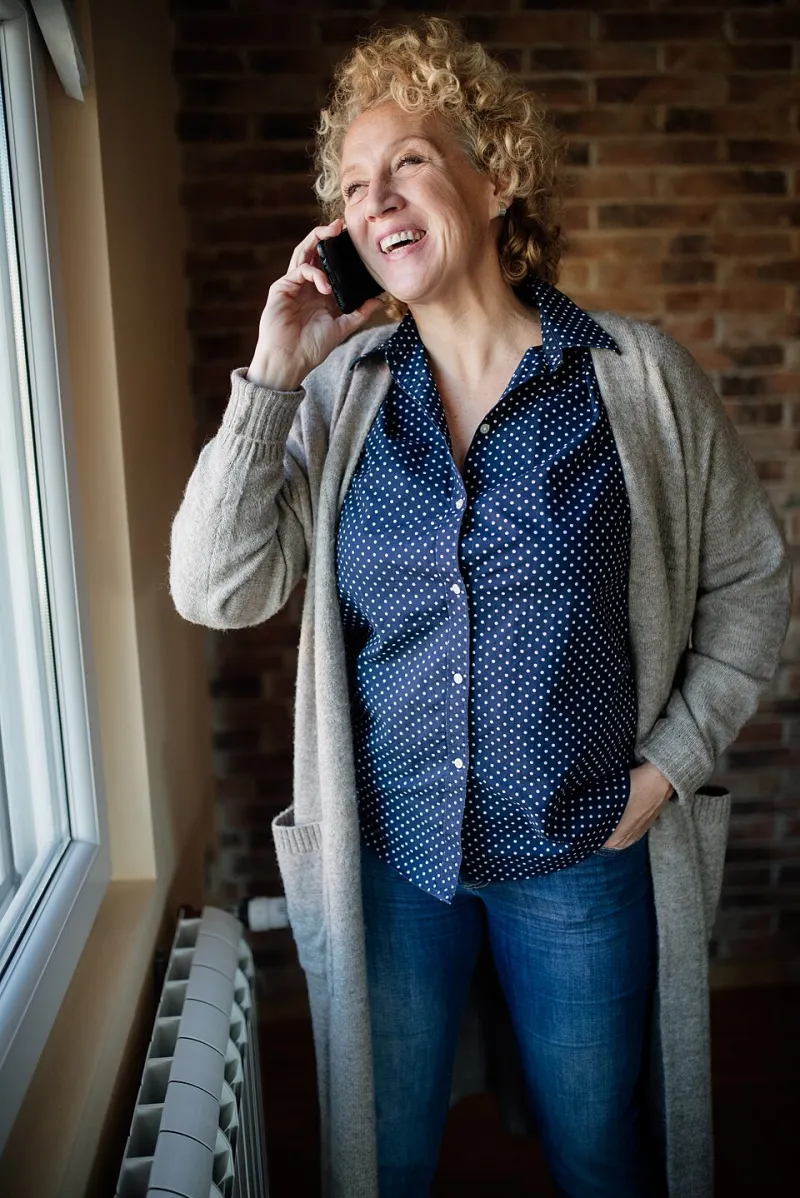
Photo: Tomi 4K', CC BY 2.0, via Wikimedia Commons
When Seeing Less Means Feeling More
We live in the most visually saturated era in human history. Between Zoom fatigue, Instagram filters, and the relentless pressure to look good on FaceTime, it's no wonder people are starting to feel emotionally exhausted just from being seen. But here's the twist nobody saw coming: a quiet rebellion is brewing, and it sounds like a phone ringing.
More and more Americans — from college students to divorcees in their 50s — are actively choosing voice-only interactions when they want to feel genuinely close to someone. No camera. No lighting check. No wondering whether the angle makes your chin look weird. Just a voice, a listener, and the kind of unfiltered honesty that screens somehow make harder to access.
It's what relationship researchers are starting to call the intimacy paradox: the less you can see, the more you tend to feel.
The Visual Overload Problem Nobody Talks About
Here's something worth sitting with. When you're on a video call, your brain is doing a lot of simultaneous work. It's monitoring your own image in that little corner box, reading the other person's micro-expressions, adjusting your posture, maybe smoothing your hair. Cognitive scientists call this "dual processing load," and it quietly drains the mental bandwidth you'd otherwise spend on emotional attunement.
Dr. Patricia Greenfield, a developmental psychologist at UCLA, has long studied how media environments shape social cognition. Her broader research suggests that screen-heavy interaction trains us to prioritize surface-level visual cues over deeper empathic listening. In plain terms: when there's a lot to look at, we stop truly paying attention.
Phone conversation flips that dynamic entirely. With no image to process, the brain redirects its focus toward vocal tone, word choice, pacing, and emotional subtext. Listeners become — almost involuntarily — more attuned. And speakers, freed from the performance anxiety of being watched, tend to open up in ways they simply don't on camera.
"I Finally Said Things I'd Never Been Able to Say on Screen"
Talk to people who've leaned into phone-based intimacy, and you start hearing a pattern.
Marcus, a 34-year-old marketing manager from Atlanta, describes his first experience with a phone intimacy service as unexpectedly cathartic. "I figured it would feel kind of transactional," he admits. "But within about ten minutes I was talking about stuff I hadn't told my closest friends. There was something about not being looked at that made it easier to be honest."
Similarly, Dana, a 41-year-old nurse from Portland, Oregon, says she turned to voice-only connections after years of feeling oddly lonely despite a packed social media feed. "Video calls feel like presentations," she says. "Phone calls feel like conversations. There's a difference, and it's huge."
These aren't isolated anecdotes. They reflect something psychologists have been quietly documenting for years: the phenomenon of deindividuation through visual anonymity, where the removal of a visible identity actually encourages more authentic self-disclosure rather than less.
The Neuroscience of Hearing Someone
Voice carries emotional data that video, paradoxically, can sometimes obscure. Research published in the journal Psychological Science found that people accurately identified emotional states from voice alone at rates comparable to — and sometimes exceeding — face-to-face interaction. The human ear, it turns out, is a remarkably sophisticated emotional instrument.
When you hear someone's voice crack slightly, or notice the pause before they answer a hard question, or catch the warmth that creeps into a laugh — you're picking up on signals that a video feed can compress, pixelate, or simply distract you from noticing. Audio-only communication forces both parties into a kind of radical presence. You can't zone out and scroll. You can't check your reflection. You just... listen.
This is part of why platforms like PhoneDesire, which center the voice as the primary channel for intimate connection, are resonating with users who feel burned out by the visual demands of modern digital life. The phone isn't a step backward. For a lot of people right now, it's the most honest place they've got.
Vulnerability Needs Somewhere to Hide
There's a concept in psychology called "optimal distinctiveness" — the idea that people open up most when they feel simultaneously connected and anonymous. Think about why strangers on long flights sometimes share things they'd never tell their families. The social stakes feel lower. The performance pressure drops away.
Phone intimacy creates a similar dynamic. You're genuinely connecting with another human being, hearing their real voice, sharing real time together — but without the visual exposure that triggers self-consciousness. That combination, connection without surveillance, is rare in modern life. And apparently, people are hungry for it.
Relationship therapist and author Dr. Alexandra Solomon, who focuses on relational self-awareness, has noted in her work that many of her clients struggle most with intimacy not because they lack desire for closeness, but because they feel perpetually on display. The camera, even in personal contexts, can activate the same performance instincts we bring to job interviews or social media posts. Voice-only spaces sidestep that entirely.
Relearning How to Be Heard
There's something almost countercultural about choosing a phone call in 2025. We've been conditioned to believe that more technology, more visual information, more bandwidth equals better connection. But the data — and more importantly, the lived experience of millions of Americans — is starting to suggest otherwise.
When people call PhoneDesire, they're not just looking for entertainment or escape (though there's nothing wrong with either). Many are looking for the specific feeling of being heard without being judged. Of speaking freely without managing how their face looks while they do it. That's not a small thing. In a culture that monetizes attention and commodifies appearance, a space where none of that matters is genuinely radical.
The intimacy paradox is real, and it's reshaping how Americans think about connection. Strip away the screen, and what you're left with is something older, simpler, and — for a lot of people — far more satisfying: one human voice reaching another, with nothing in between.
Sometimes less really is so much more.