Strip Away the Visual, Unlock the Real: The Strange Psychology of Seeing Less and Feeling More

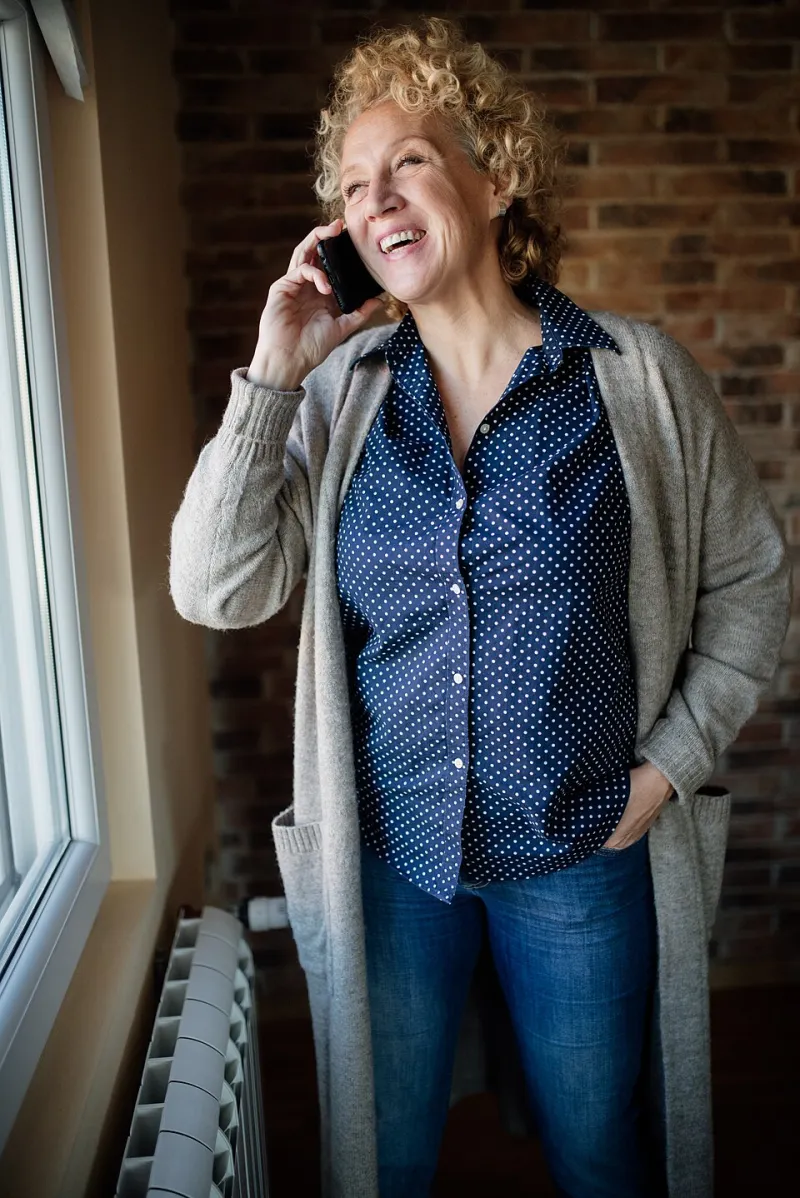
Photo: Shixart1985, CC BY 2.0, via Wikimedia Commons
Here's something that sounds like it shouldn't work: people who can't see each other often connect deeper than people who can. No eye contact, no body language, no visual cues whatsoever — and somehow the emotional bond that forms is richer, rawer, and more honest than what most face-to-face encounters ever manage to produce.
Welcome to what researchers are starting to call the intimacy paradox. The less visual information you have, the more emotionally present you become. And once you understand the neuroscience and psychology behind it, a lot of things start making a whole lot of sense.
Your Brain on Absence
Human brains are visual processing machines. Roughly 30% of your cortex is devoted to handling what your eyes take in — compared to about 8% for touch and a mere 3% for hearing. When you're sitting across from someone on a date, your brain is working overtime. It's cataloging micro-expressions, tracking posture shifts, making snap judgments about attractiveness, monitoring eye contact, and running constant background calculations about social status and threat level.
That's a lot of cognitive bandwidth getting burned on visual data. And here's the kicker: most of that processing happens below conscious awareness. You're not choosing to analyze someone's eyebrow movement — your brain just does it, automatically, pulling resources away from deeper emotional engagement.
Now take the visual channel away entirely. Suddenly all that processing power has nowhere to go. Your brain, being the adaptive organ it is, redirects that energy. You start listening differently — not just to what someone is saying, but to the texture of how they say it. The hesitation before a vulnerable admission. The warmth that creeps into someone's voice when they talk about something they genuinely love. The slight catch in their breath when a question lands close to something real.
"When we remove the visual, we essentially force the brain into a more receptive listening state," explains the emerging body of research on sensory-specific attention. "Active listening isn't just a communication skill — it's a neurological event."
The Imagination Engine
There's another piece to this puzzle that doesn't get nearly enough credit: imagination.
When you can see someone, your brain stops filling in gaps because there are no gaps to fill. But in a voice-only interaction, your imagination kicks into high gear. You're constructing a mental portrait of the other person — not from visual data, but from emotional data. The kindness in their tone. The intelligence in their phrasing. The vulnerability in what they choose to share.
Psychologists have known for decades that self-generated mental imagery produces stronger emotional responses than externally provided images. It's the same reason the book is almost always better than the movie — your brain builds a version of the story that's perfectly calibrated to you, drawing on your own emotional history and desires.
In voice-based intimate connection, the same mechanism runs wild. The person you're building in your mind isn't just a face — they're an emotional presence, constructed from everything that actually matters in human connection. And because you built them yourself, the bond feels immediate and real in a way that no amount of scrolling through profile photos ever quite replicates.
Why Constraints Create Freedom
It seems backwards, but constraints are genuinely liberating — especially when it comes to self-expression. When you know someone can't see you, a particular kind of anxiety dissolves. You stop worrying about whether your hair looks okay or whether your apartment is presentable in the background. The performance layer drops away.
This isn't just anecdote. Research on self-disclosure consistently shows that people reveal more authentic information about themselves in lower-visibility contexts. The psychological concept here is evaluation apprehension — the anxiety that comes from knowing you're being visually assessed. Remove that, and people become startlingly honest.
Therapists have observed this dynamic for years. Clients in phone sessions frequently go deeper, faster than those in face-to-face appointments. Something about not being watched creates a kind of emotional permission slip. You're not performing. You're just... talking. Being.
For intimate connection specifically, this matters enormously. Desire and vulnerability are already emotionally loaded territory. Add the weight of being watched, judged, and visually cataloged, and most people instinctively hold back. Take the visual pressure away, and what emerges is often startlingly genuine.
The Sound of Someone Real
Voice carries information that no camera can capture. Researchers studying paralinguistic cues — the stuff around the words rather than in them — have found that tone, rhythm, pace, and pitch communicate emotional states with remarkable precision. We're wired to read these signals. It's ancient, pre-language human communication, and it bypasses a lot of the filtering and performance that visual interaction tends to trigger.
When someone's voice softens unexpectedly, you feel it. When their energy shifts as a topic changes, you notice. These aren't things people can easily fake or curate, the way they can manage their facial expressions or choose a flattering camera angle. Voice is harder to lie with.
That's part of why phone-based intimacy tends to feel so real to people who try it. You're getting an unfiltered signal. The artifice that social media and dating apps have trained us to expect — the filters, the highlight reels, the carefully managed visual presentation — simply doesn't exist. What you hear is what someone actually sounds like when they're present with you.
Less Really Is More
American culture has spent the last decade drowning in visual stimulation. Screens everywhere, cameras always on, every interaction potentially captured and broadcast. It's exhausting in ways most people don't consciously register until they step away from it.
Voice-only intimacy offers something increasingly rare: a space where you're not being looked at. Where the connection you build is based on what you say, how you say it, and what you're willing to feel. Where imagination does the work that algorithms usually try to do for you.
The intimacy paradox turns out to be less paradoxical than it first appears. When you strip away visual noise, you're not losing information — you're filtering it. What remains is the stuff that actually drives deep human connection: emotional honesty, active presence, and the willingness to be heard.
Sometimes the clearest way to see someone is to stop looking entirely.