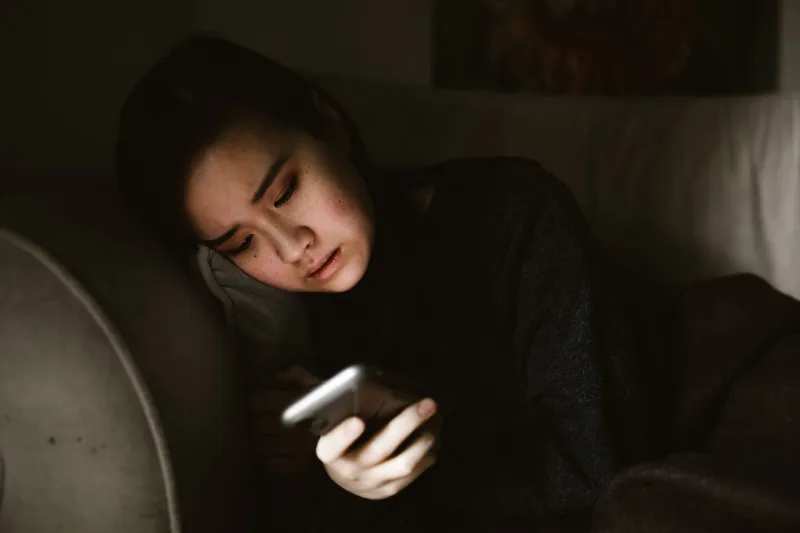
On Her Own Terms: Why Phone Intimacy Is the Quiet Revolution Women Didn't Know They Were Starting
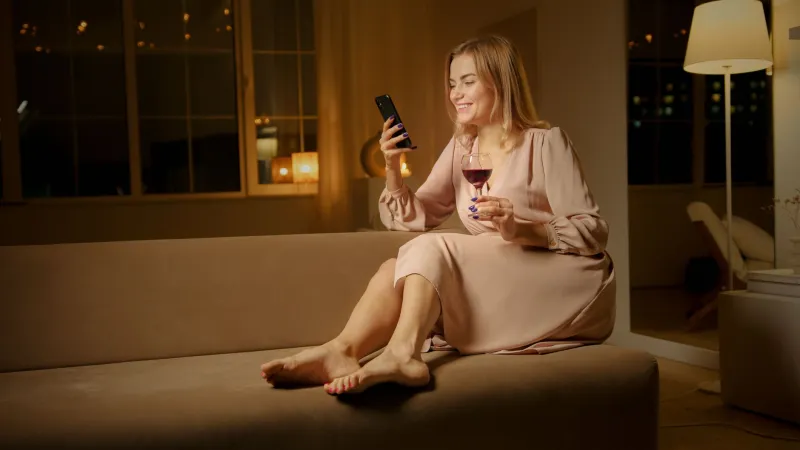
It didn't start with a manifesto. There was no viral moment, no hashtag, no think-piece that launched it. It happened quietly, in the private decisions of women who were simply tired — tired of performing, tired of calculating risk, tired of desire being something that happened to them rather than something they got to direct.
What they found, increasingly, was the phone.
The Performance Tax Women Pay in Visual Spaces
Let's be honest about something that doesn't get said plainly enough: visual-based intimacy, whether it's dating apps, video calls, or in-person meetings, carries a performance overhead that falls disproportionately on women.
Before a woman even begins to express desire, she's already navigated a set of unspoken questions. How do I look? Am I presenting the right version of myself? Will this be held against me? Is this safe? These aren't neurotic worries — they're rational responses to a culture that has historically judged women's sexuality through an appearance-first lens and hasn't always been kind about what it finds.
The result is what some psychologists call "erotic self-consciousness" — a state where the awareness of being observed disrupts the actual experience of desire. You can't fully inhabit a feeling when part of your brain is monitoring how you look while feeling it.
Phone intimacy removes the observer. Entirely. And for many women, that removal is nothing short of transformative.
Invisible and Unleashed
There's a particular freedom in being heard but not seen, and women are discovering it in numbers that are quietly reshaping how the phone intimacy space operates.
Without the visual layer, the usual hierarchies flatten. It doesn't matter what size you are, how your hair looks at 11 p.m., whether your apartment is Instagram-worthy in the background. None of the things that get weaponized against women in visual spaces can reach you here. What remains is voice, wit, honesty, and desire — and those, it turns out, are more than enough.
Women who've made this shift describe it in strikingly similar terms: a sense of permission they didn't realize they'd been denied. Permission to be explicit without being judged for how they look while being explicit. Permission to explore without it becoming a public record. Permission to want, loudly and without apology, in a space where wanting doesn't come with a visual tax attached.
The Safety Math Nobody Talks About Openly
Here's a practical reality that shapes women's intimate choices in ways that rarely make it into mainstream conversation: safety is a constant variable in the equation.
Meeting a stranger involves risk assessment that most men simply don't have to perform at the same level. First dates require location vetting, check-in texts to friends, exit strategies. Even video calls carry the anxiety of screen-recording and the knowledge that your image can be captured and distributed without your consent.
Phone intimacy sidesteps nearly all of this. No location is revealed. No image exists to be taken. The interaction is contained, controllable, and reversible — you can end it the moment it stops feeling right, without the social complexity of leaving a physical space or the digital anxiety of having been visually recorded.
This isn't a minor convenience. For many women, it's the entire reason they're there. Control over the terms of engagement isn't a luxury — it's the prerequisite for actually being present enough to enjoy anything.
Challenging the Beauty Standard From the Inside Out
There's something quietly radical about choosing a form of intimacy that makes your appearance entirely irrelevant.
American beauty culture has spent decades telling women that their desirability is a visual proposition — that being wanted is contingent on looking a certain way. Dating apps, with their swipe-based mechanics, operationalized this idea into an algorithm. You are, in the most literal sense, judged by your cover.
Phone intimacy refuses that premise. It insists, structurally, that the interesting stuff — the voice, the mind, the particular way someone tells a story — is the actual substance of attraction. Women who've spent years internalizing visual-performance anxiety often describe their first experiences with voice-only intimacy as disorienting in the best possible way. The usual rules don't apply. Which means the usual anxieties don't have to either.
This isn't just personally liberating. It's a quiet challenge to the entire apparatus of appearance-based desirability that has defined — and limited — women's erotic lives for generations.
Autonomy as an Erotic Force
Here's what the data on women's sexual satisfaction consistently shows: autonomy is one of the most powerful drivers of genuine desire. Women who feel in control of their erotic experiences — who feel like agents rather than objects — report significantly higher levels of both arousal and satisfaction.
Phone intimacy is, at its core, a structure built on autonomy. You initiate when you want. You direct where things go. You end it on your schedule. Nobody's gaze is on you, nobody's expectations are physically present in the room, and the entire experience unfolds according to your preferences and your pace.
For women who've spent their erotic lives navigating the desires of others, this kind of self-directed experience can feel almost shockingly different. Not just pleasant — revelatory.
The Revolution Stays Quiet Because It Doesn't Need an Audience
This shift isn't showing up in trend reports yet because it doesn't announce itself. Women aren't posting about it. They're just doing it, in the private hours of their own lives, making choices that center their own pleasure without asking for anyone's approval.
That, honestly, might be the most radical part of all.