Infinite Choices, Zero Connection: How Voice-First Intimacy Is Fixing What the Algorithm Broke

Photo: 1st Lt. Mark Lazane, Public domain, via Wikimedia Commons
There's a cruel joke buried inside every dating app. It goes like this: the more people they show you, the less any single one of them seems to matter. You swipe through faces the way you scroll a restaurant menu at midnight — vaguely hungry, increasingly overwhelmed, and somehow still unable to commit to anything. By the time you've matched with forty people in a week, you've genuinely connected with none of them.
Welcome to the attention economy. Population: everyone. Satisfaction: optional.
The Algorithm Was Never Designed for Your Loneliness
Here's something the Silicon Valley pitch decks never quite got around to mentioning: platforms built on engagement metrics are not built for your emotional wellbeing. They're built to keep you on the app. And the single most effective way to keep you on the app is to make sure you never fully get what you came for.
Dr. Barry Schwartz, the psychologist behind the widely cited "paradox of choice" framework, has long argued that more options don't make us happier — they make us more anxious and less decisive. Apply that logic to romantic or intimate connection and the effect is almost comically destructive. When you believe there's always someone better one swipe away, you never fully invest in the person in front of you. Or, in this case, on the other end of your screen.
The result? Americans are, by many measures, lonelier than they've ever been. A 2023 report from the U.S. Surgeon General declared loneliness a public health crisis. Rates of social isolation have climbed steadily even as — or arguably because — digital connection tools have multiplied. We are more reachable than ever and less reached than we've felt in decades.
Scarcity, Intentionality, and the Case for One Good Conversation
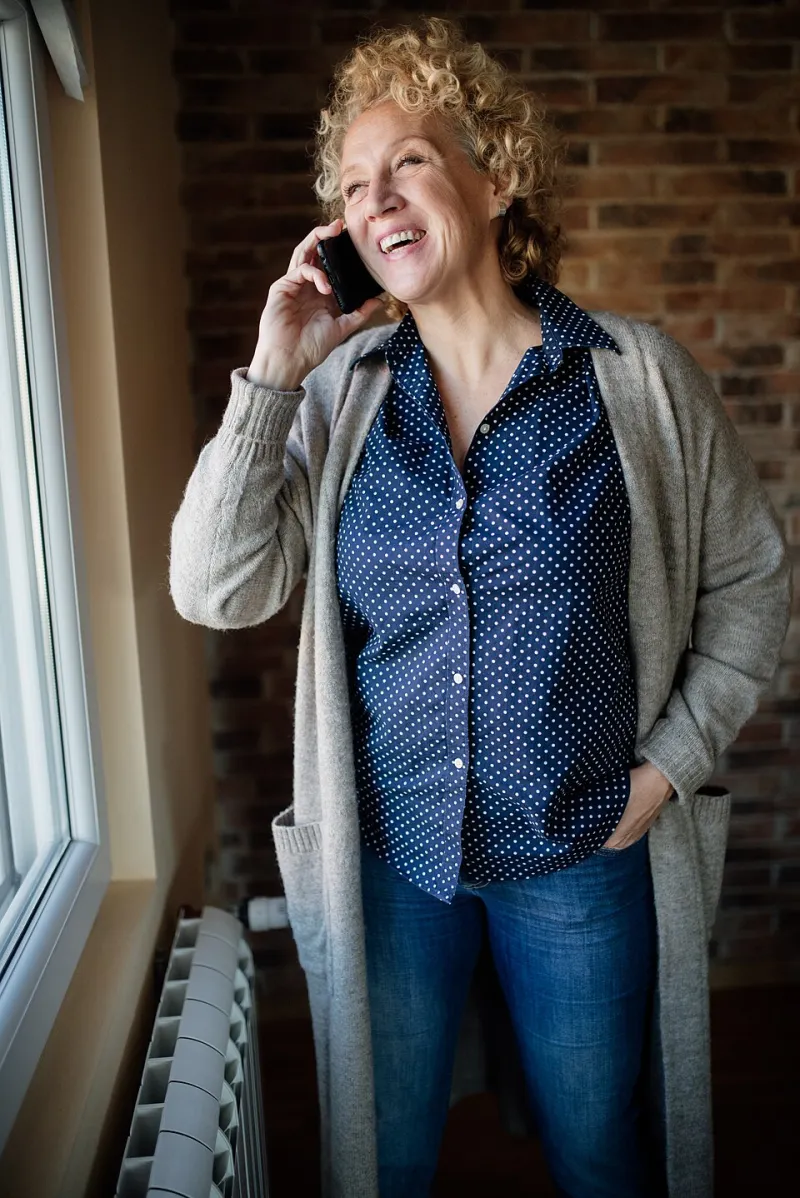
Contrast the swipe economy with what happens when you pick up a phone and actually talk to someone.
The voice-first model, which sits at the heart of services like PhoneDesire, operates on a fundamentally different logic. There is no profile to curate, no photo filter to hide behind, no algorithmic queue of alternatives waiting if this particular conversation disappoints. There is a voice, a moment, and a choice to be present — or not.
That scarcity is a feature, not a limitation.
When people know they can't bounce between ten simultaneous text threads, something shifts. Attention narrows. Listening deepens. The conversation becomes the entire experience rather than a stepping stone toward some hypothetical future meetup that statistics say will probably never happen anyway. Research from the University of Chicago found that people consistently underestimate how meaningful a real-time voice conversation will be compared to text-based exchange — and consistently overestimate how awkward it'll feel. In other words, we've been trained to fear the very thing that actually works.
What Users Are Actually Saying
Spend any time in communities where people discuss phone-based intimacy and you'll notice a pattern in how people describe the experience. The word that comes up again and again, almost universally, is real.
"I'd been on three different dating apps for two years," said one user from Austin who asked to be identified only as Marcus. "I had hundreds of matches and maybe a dozen actual conversations. Nothing stuck. The first time I had a real phone conversation with someone who was genuinely focused on me — not half-watching Netflix, not composing three other messages — I remembered what connection was supposed to feel like."
Another user, a woman in her late thirties from the Chicago suburbs, described the shift as almost physical. "There's this thing that happens when someone's voice is all you have. You start actually listening — to the pauses, to the way they laugh, to what they choose to say next. You can't fake that kind of attention. And you can't really receive it on an app."
These aren't isolated testimonials. They reflect something structural about how voice communication works on a neurological level. Human brains are exquisitely tuned to vocal cues — pitch, rhythm, breath, hesitation. We evolved to extract enormous amounts of emotional information from sound long before we developed language sophisticated enough to put feelings into words. Apps that strip that channel away aren't just inconvenient. They're cutting off one of our most fundamental means of knowing whether we're safe, seen, and genuinely desired.
Presence as a Radical Act
In an era designed to fragment your attention into seventeen directions simultaneously, choosing to be fully present with another person for the duration of a phone call is, in its own small way, a countercultural statement.
There's a reason meditation teachers and therapists both emphasize the power of undivided attention — it's rare enough in modern life to feel genuinely transformative when you receive it. Phone intimacy, at its best, delivers exactly that. Not a curated highlight reel. Not an optimized profile. Just a voice, choosing to be here, with you, right now.
For a generation that grew up optimizing everything — their calories, their commutes, their content feeds — the idea that the best connection might come from a format that can't be gamed or A/B tested is almost counterintuitive. But that's precisely the point. Authenticity resists optimization. And the attention economy, for all its algorithmic sophistication, has never figured out how to manufacture the feeling of being truly heard.
The Deliberate Turn Toward Something Better
None of this means dating apps are going away. They serve a purpose — low-stakes browsing, geographic filtering, the occasional genuine match. But more and more Americans are recognizing them for what they are: a starting point, not a destination. And an increasingly poor substitute for the kind of connection that actually satisfies.
The growth of voice-first intimacy platforms isn't a retreat from modernity. It's a correction. A recalibration toward the formats of connection that human beings are actually wired for, delivered through the technology we already carry in our pockets.
You don't need a better algorithm. You need someone who picks up the phone and actually wants to talk to you.
Turns out, that's been available this whole time.