Overstimulated and Underwhelmed: How Doing Less Actually Makes You Feel More
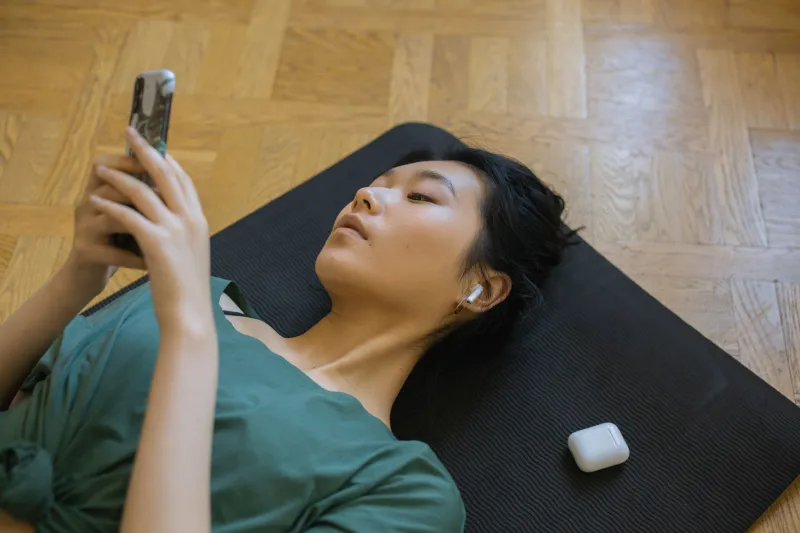
Here's a weird thing that happens when you spend too long at an all-you-can-eat buffet: eventually, everything starts tasting the same. Doesn't matter how good the food is. Your palate just... gives up. Neuroscientists have a name for what's happening in your brain right now, after years of living inside a content firehose — and it's not pretty. But the fix? Surprisingly simple. And surprisingly intimate.
Your Brain Is Running on Empty (Even When You're Constantly Stimulated)
Stimulus saturation is the unglamorous term for what happens when your dopamine system gets hammered so hard, so often, that it stops responding the way it should. Think of dopamine not as the "pleasure chemical" — that's an oversimplification — but as your brain's anticipation and reward signal. It fires when something feels novel, meaningful, or potentially good.
The problem with modern digital life is that we've essentially hacked that system into a constant low-grade buzz. Every swipe, every notification ping, every autoplay thumbnail is a micro-hit. And like any tolerance-building substance, you need more and more just to feel the same baseline level of interested. Over time, the ordinary stuff — a slow conversation, a quiet evening, a voice in your ear — starts to feel flat. Not because those things got worse, but because your brain's reward circuitry got exhausted.
Researchers studying media consumption patterns have noted something they're calling "affective blunting" in heavy content consumers — a dulling of emotional response that mirrors, in milder form, what clinicians see in people with chronic stress disorders. You're not depressed. You're just... saturated.
The Boredom Comeback Tour
Here's where it gets interesting. Boredom — real, uncomfortable, nothing-to-do boredom — used to be considered a problem to solve. Now neuroscientists are reframing it as a feature, not a bug. When your brain isn't chasing stimuli, it enters what researchers call the default mode network: a kind of internal wandering state that's actually linked to creativity, self-reflection, emotional processing, and — crucially — desire.
You cannot want something deeply if you've been half-wanting everything constantly. The brain needs contrast. It needs a valley to appreciate a peak.
This is part of why so many people — especially younger Americans who grew up swimming in content — are reporting that their most meaningful recent experiences happened in low-stimulation environments. Not at a concert, not doom-scrolling at 2 a.m., but in quieter, more stripped-down moments. A long drive. A phone call with someone whose voice they love. An audio experience with no visuals attached.
Why Audio-Only Hits Different (Literally)
When you remove the visual component from an intimate experience, something neurologically unusual happens. Your auditory cortex gets a bigger slice of your brain's processing bandwidth. Sounds become richer, more textured, more emotionally weighted. A voice that might have been background noise in a video call suddenly carries everything — tone, breath, hesitation, warmth.
More importantly, your imagination kicks in. And your imagination, it turns out, is a significantly better storyteller than any algorithm. It builds exactly the version of an experience that your particular brain finds most compelling, drawing on your own memories, desires, and emotional vocabulary. No content creator, no matter how talented, can compete with your own subconscious.
This is one of the reasons phone-based intimate connection has been quietly gaining ground as people retreat from visual-heavy platforms. It's not nostalgia. It's neuroscience. The absence of imagery creates a kind of productive cognitive space — a gap your brain rushes to fill with something far more personally resonant than anything a screen could show you.
Gen Z's Quiet Rebellion Against Content Culture
If you've spent any time paying attention to how younger Americans talk about their digital exhaustion, you've probably noticed a recurring theme: they're not just tired of bad content. They're tired of all content. The volume, the pace, the relentlessness of it.
Surveys consistently show that Gen Z reports higher rates of social media fatigue than any previous generation — which is remarkable given that they're the ones who grew up with it. But it makes a certain kind of sense. When you've never known a world without infinite scroll, the burnout comes earlier and runs deeper.
What's emerging in response isn't a wholesale retreat from technology. It's a curation of how technology feels. More audio. More asynchronous. More intentional. Podcasts over YouTube. Voice notes over texts. Phone calls — real ones, long ones — over video chats. The appeal isn't just aesthetic. It's about reclaiming the ability to actually feel something during a connection, rather than just processing it.
For a platform like PhoneDesire, this cultural shift isn't surprising — it's validating. The premise that a voice, heard directly and without visual distraction, can deliver something more intimate than a polished visual experience isn't a throwback idea. It's increasingly where the culture is landing.
Recalibrating Your Desire Threshold
The good news is that dopamine receptors aren't permanently damaged by overstimulation. They recalibrate. The clinical term is "downregulation" on the way in and "upregulation" on the way out — basically, your sensitivity to reward can be restored if you give your brain some breathing room.
This is why people who take even short breaks from heavy screen use often report that ordinary pleasures feel sharper afterward. Food tastes better. Music hits harder. Conversation feels more electric. The contrast effect is real, and it doesn't take long to kick in.
Applying this to intimate connection is pretty straightforward: if you've been consuming so much visual content that nothing feels particularly exciting anymore, an audio-only experience — a real voice, an unhurried conversation, something that requires your imagination to do some of the work — can feel almost startlingly vivid. Not because the experience is objectively more intense, but because your brain is finally getting a signal it can actually respond to.
The Quiet Room You Didn't Know You Needed
Nobody is saying delete everything and stare at a wall. That's not the point. The point is that your capacity for pleasure, for genuine connection, for feeling something real during an intimate moment — all of it depends on a brain that hasn't been numbed into indifference.
Sometimes the most radical thing you can do is pick up the phone, close your eyes, and just listen. Let a voice fill the space where the feed used to be. Let your brain do what it was built to do when it's not drowning in pixels.
Boredom, it turns out, is just desire waiting for a quiet enough room to speak up.
And when it does — you'll actually be able to hear it.